Loading...

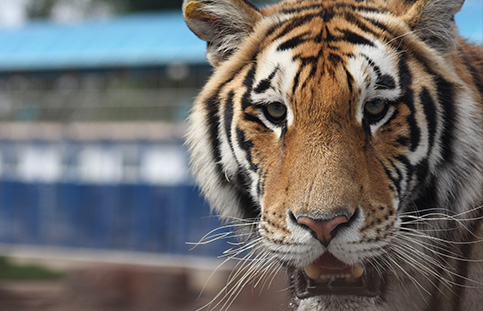
Siberian Tiger (Amur Tiger)
(Scientific name::Panthera tigris ssp.altaica):
In China, the Siberian tiger is found in coniferous and mixed coniferous-broadleaf forests below 1,000 meters above sea level in eastern Heilongjiang and Jilin provinces. It is the largest tiger subspecies, measuring 180–250 cm in body length, with a tail length of 100–110 cm and a weight of 180–340 kg. Its coat is the lightest in color among tigers, appearing milky yellow in winter, with extensive white fur on the underside of the chest, belly, and inner limbs. The blackish-brown stripes are relatively sparse and pale. Its tail is quite full and covered with thick fur, and its body hair is particularly long, all adaptations to the harsh cold of northeastern China. Scientific name: Panthera tigris ssp. altaica
South China Tiger
(Scientific name::Panthera tigris ssp.amoyensis):
The South China tiger is slightly smaller in size, measuring 140–230 cm in body length, with a tail length of 80–100 cm and a weight of 150–180 kg. Its fur is short, appearing close-fitting and smooth, and its tail is not particularly thick. However, its coat color is more vibrant than that of the Siberian tiger, displaying a bright orange-yellow hue, sometimes with a slightly reddish tint. The stripes are darker and broader, and there are often two interconnected vertical stripes on the sides forming diamond-shaped patterns, making the markings appear clearer and more beautiful. Scientific name: Panthera tigris ssp. amoyensis
Bali Tiger
(Scientific name::Panthera tigris ssp.balica):
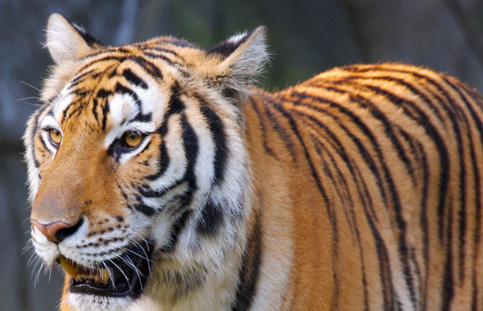
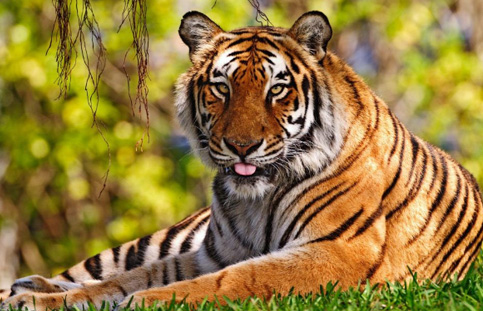
The Bali tiger lived on the Indonesian island of Bali. It had the most and densest stripes among all tiger subspecies, with up to over 100 narrow stripes. The last Bali tiger is reported to have been hunted in 1937, and the subspecies is now extinct.
Indochinese Tiger
(Scientific name::Panthera tigris ssp.corbetti):
The Indochinese tiger is primarily found in the Indochina Peninsula, specifically in Vietnam, Laos, and Cambodia. Scientific name: Panthera tigris ssp. corbetti

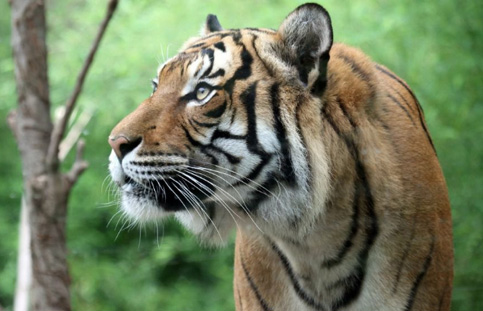
Malayan Tiger
(Scientific name::Panthera tigris ssp. jacksoni):
The Malayan tiger was recognized as a new tiger subspecies in 2004. Males can reach a total length of approximately 2.7 meters. It is found in the southern part of the Malay Peninsula, in Malaysia and Thailand. Previously thought to be Indochinese tigers, it was later discovered to be a distinct subspecies in its own right.